Custom Wind Solution took part in the Hungarian business delegation to Morocco between 28 September and 1 October 2026, organised by the Hungarian Chamber of Commerce and Industry (MKIK) around the Industrial Transformation Africa exhibition.
The centrepiece of the week was the Morocco–Hungary Business Meeting, hosted at the headquarters of the CGEM, Morocco’s employers’ confederation, and co-chaired by Mr Moulay Youssef Alaoui and Dr Viktor Dombi, Co-Presidents of the Morocco–Hungary Business Council. The session brought together Moroccan and Hungarian business leaders across infrastructure, renewable energy, ICT and industry.
CWS was invited to present its story as one of the Hungarian success cases. Our presentation, From Haouma to South Africa, and Back, traced the company’s route into the African wind service market — from the first Siemens wind farms commissioned in Morocco in 2013, through the South African operation built up since 2025, to the registration of our own South African subsidiary this summer.
Why Morocco
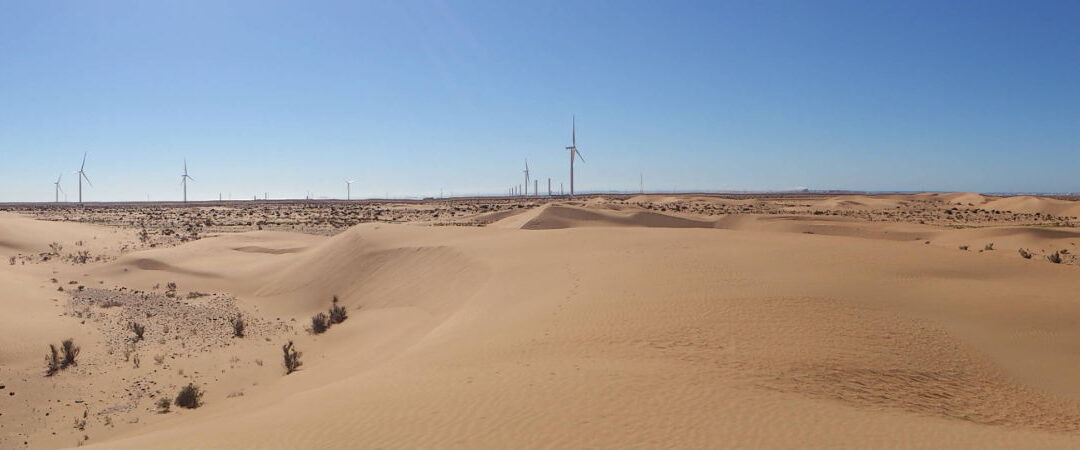
Morocco has built one of Africa’s most ambitious renewable energy programmes. Installed wind capacity now exceeds 2,400 MW across more than twenty projects, and wind accounts for roughly 80% of the country’s renewable generation.
The first generation of Moroccan turbines has now passed out of the original manufacturer warranty period. This is the stage in an asset’s life where independent service providers add measurable value: the same standard of workmanship at a lower lifetime operating cost. As the country’s fleet continues to grow towards its 2030 targets, the service layer supporting those assets will need to grow with it.
The week produced direct contact with Moroccan electrical and industrial contractors, service providers, training institutions and investment agencies. Several of these conversations are continuing.
Our approach to new markets is consistent: local presence, local partners and locally trained technicians, working to the same standards we apply everywhere. It is the model that built our South African operation, and it is the model we would like to bring to Morocco.
We are grateful to the Morocco–Hungary Business Council, to the MKIK team, to the Embassy of Hungary in Rabat and to CGEM for making the visit possible.